
Python
GPUStack
Manage GPU clusters for running models
by gpustack · Apache-2.0
Run LLMs locallyGPU cluster managerApache-2.0Runs locallyPythonAdvanced
From the README
 Documentation ↗
Excerpts from the project README on GitHub. Copyright and licensing remain with the respective authors.
A high count usually means the project is heavily examined. A low count usually means it is little examined — not that it is safe.
No public activity signals for this tool — it has no open repository we can measure.
🐳 Docker pulls
📦 PyPI downloads / month
📦 npm downloads / month
🚀 Latest release ·
What is GPUStack?
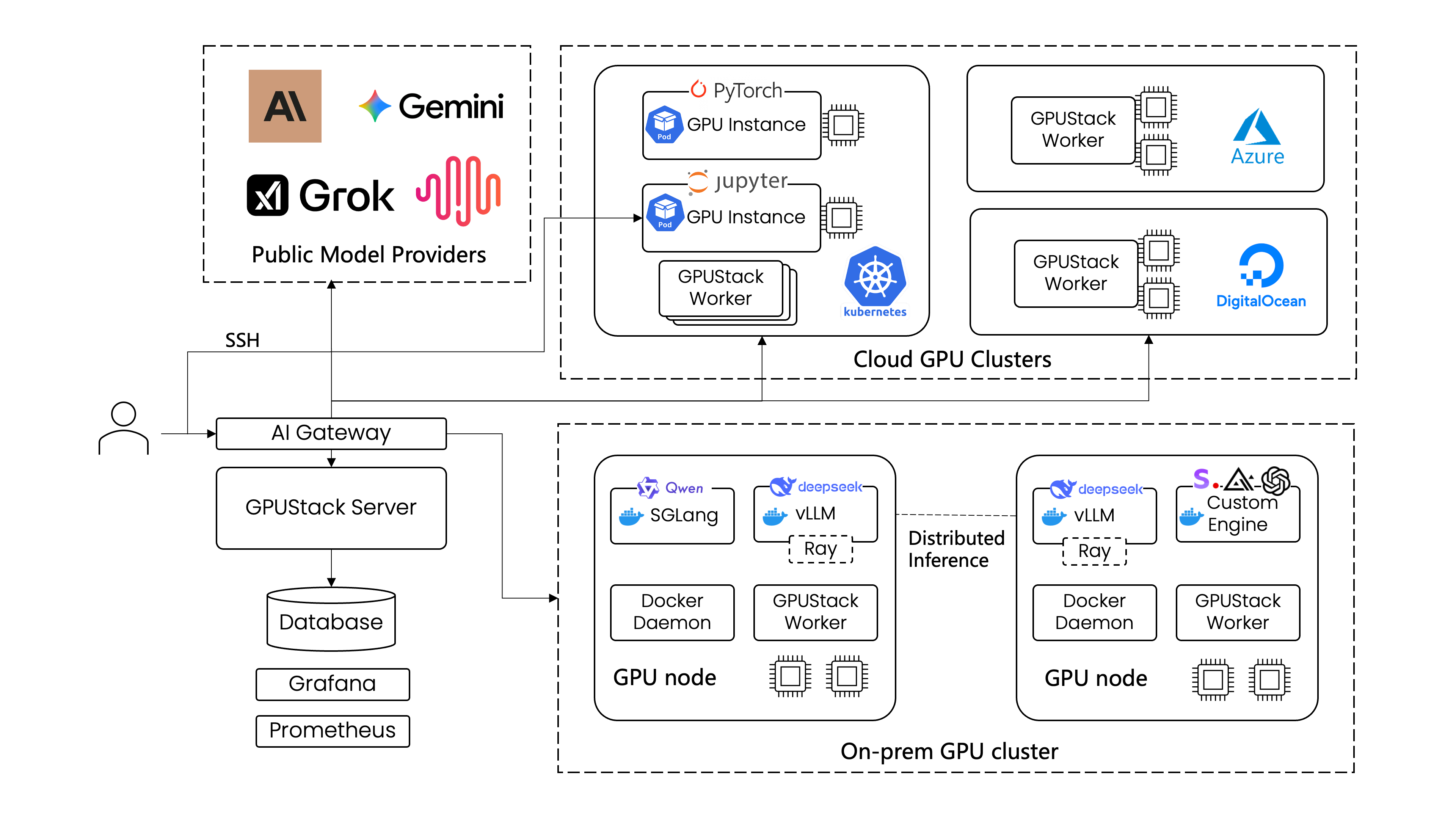
GPUStack pools heterogeneous GPUs across machines into one cluster and schedules model workloads across them, with a web UI and OpenAI-compatible endpoints.
Why people choose GPUStack
- Pools GPUs across many machines
- Mixes NVIDIA, Apple and AMD hardware
- Web UI with usage metrics
GPUStack at a glance
| Category | Run LLMs locally |
| Type | GPU cluster manager |
| License | Apache-2.0 |
| Runs locally | Yes |
| Built with | Python |
| Skill level | Advanced |
| Best for | teams with several GPU machines to pool |
Latest releases
Open-source alternatives to GPUStack
Other open-source run llms locally tools worth comparing:
 OllamaRun open LLMs locally from one command
 JanOpen-source, offline ChatGPT-style desktop app
 GPT4AllPrivate local AI that runs on CPU
 llama.cppThe C/C++ engine powering local inference
 LocalAIA drop-in OpenAI API you self-host
 Text Generation WebUIFeature-rich web UI for local models
 KoboldCppSingle-file local model runner
 MLC LLMRun LLMs on any device, even phones
 llamafileOne executable file = model + runtime
 exoRun big models across your everyday devicesCortexOllama-style runtime from the Jan team
 Nexa SDKRun any model on any device — CPU, GPU, NPU
 RamaLamaRun models as OCI containers
GPUStack head-to-head
GPUStack vs OllamaGPUStack vs LM StudioGPUStack vs JanGPUStack vs GPT4AllGPUStack vs llama.cppGPUStack vs LocalAIGPUStack vs Text Generation WebUIGPUStack vs KoboldCppGPUStack vs MLC LLMGPUStack vs llamafileGPUStack vs exoGPUStack vs CortexGPUStack vs Nexa SDKGPUStack vs RamaLama
FAQ
Is GPUStack free?
GPUStack is free and open-source (Apache-2.0 license), so you can use, self-host and modify it at no cost.
Can I run GPUStack locally?
Yes. GPUStack is designed to run on your own machine or server, keeping your data private.
What is the best alternative to GPUStack?
Popular open-source alternatives include Ollama, LM Studio, Jan. See the comparisons above to choose.
Explore more open-source AI
Browse the full directory of open-source AI tools, models and projects — updated daily.
Browse all tools →