
qdrant
Qdrant - High-performance, massive-scale Vector Database and Vector Search Engine for the next generation of AI. Also available in the cloud https://cloud.qdrant.io/
Qdrant is a high-performance vector database written in Rust, with rich filtering, payloads and a simple API for production semantic search and RAG.
From the README
docker run -p 6333:6333 qdrant/qdrant
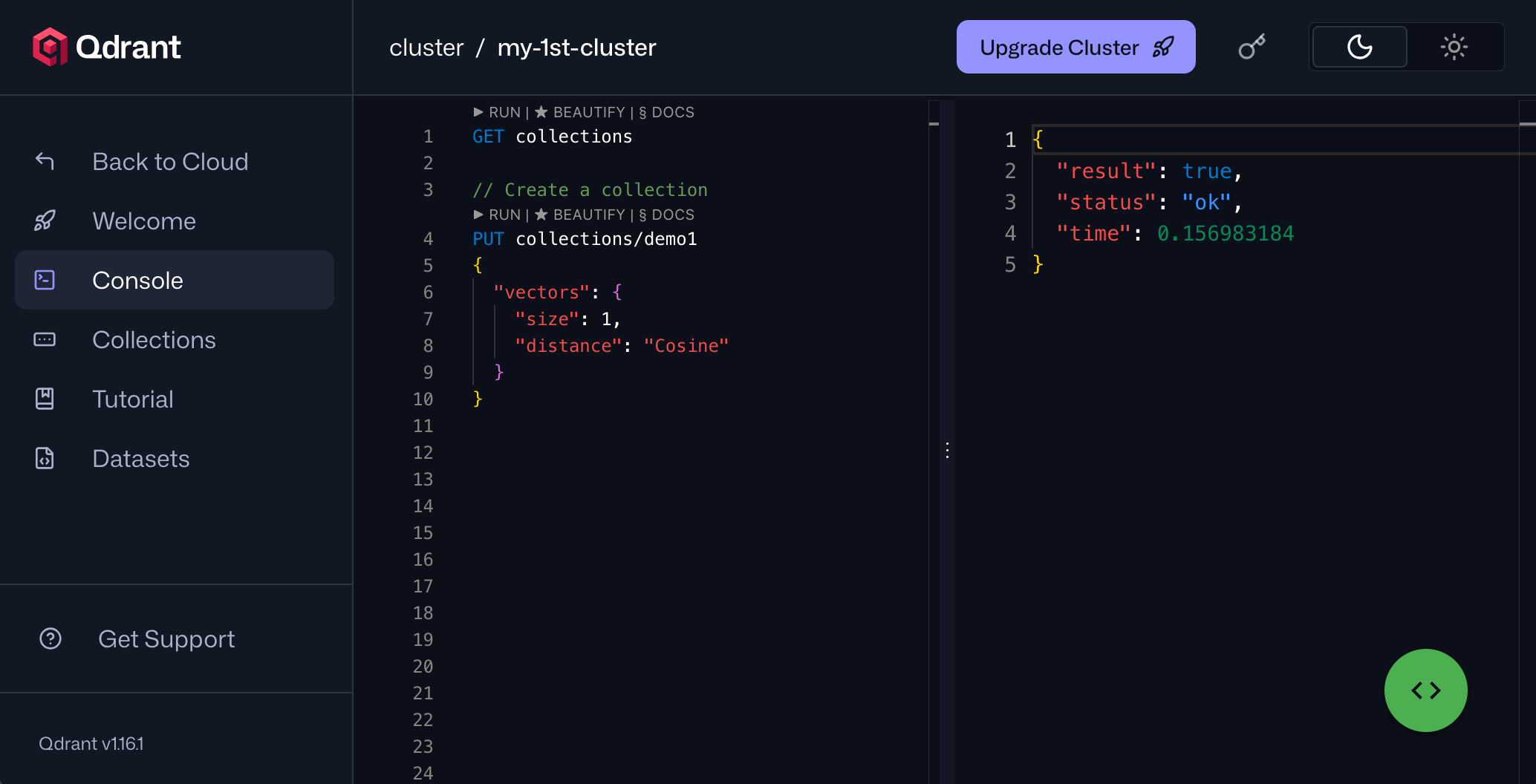
- Quick Start Guide
- Detailed Documentation
- Take the Qdrant Essentials course
- Follow this tutorial to create a semantic search engine with Qdrant
Excerpts from the project README on GitHub. Copyright and licensing remain with the respective authors.
Claim its page: indexed whatever its rank, translated into six languages, and enriched with what you write yourself.
Get an email alert on its next release or when it starts trending — never miss the moment.
Free · no card · unsubscribe anytimeQdrant - High-performance, massive-scale Vector Database and Vector Search Engine for the next generation of AI. Also available in the cloud https://cloud.qdrant.io/
qdrant has 33.4k stars on GitHub. It has been forked 2.5k times. qdrant is written mainly in Rust. It has been in active development since 2020. qdrant is available under the Apache-2.0 license. Its main topics are ai-search, ai-search-engine, embeddings-similarity, hnsw.
Read the full guideWhat is qdrant?
Qdrant - High-performance, massive-scale Vector Database and Vector Search Engine for the next generation of AI. Also available in the cloud https://cloud.qdrant.io/
Is qdrant open source?
qdrant is an open-source project. It is released under the Apache-2.0 license.
Is qdrant free?
Yes. qdrant is free and open source — you can use, modify and self-host it.
What license does qdrant use?
qdrant is available under the Apache-2.0 license.
What language is qdrant written in?
qdrant is written mainly in Rust.
Add this live badge to your README — your GitHub stars and directory rank, refreshed daily.
[](https://olud.ai/project/qdrant-qdrant.html)


Measured from GitHub topics shared by both projects, weighted by how rare each topic is.