
Train a small language model from scratch in just two hours, even on a personal computer.
From the README
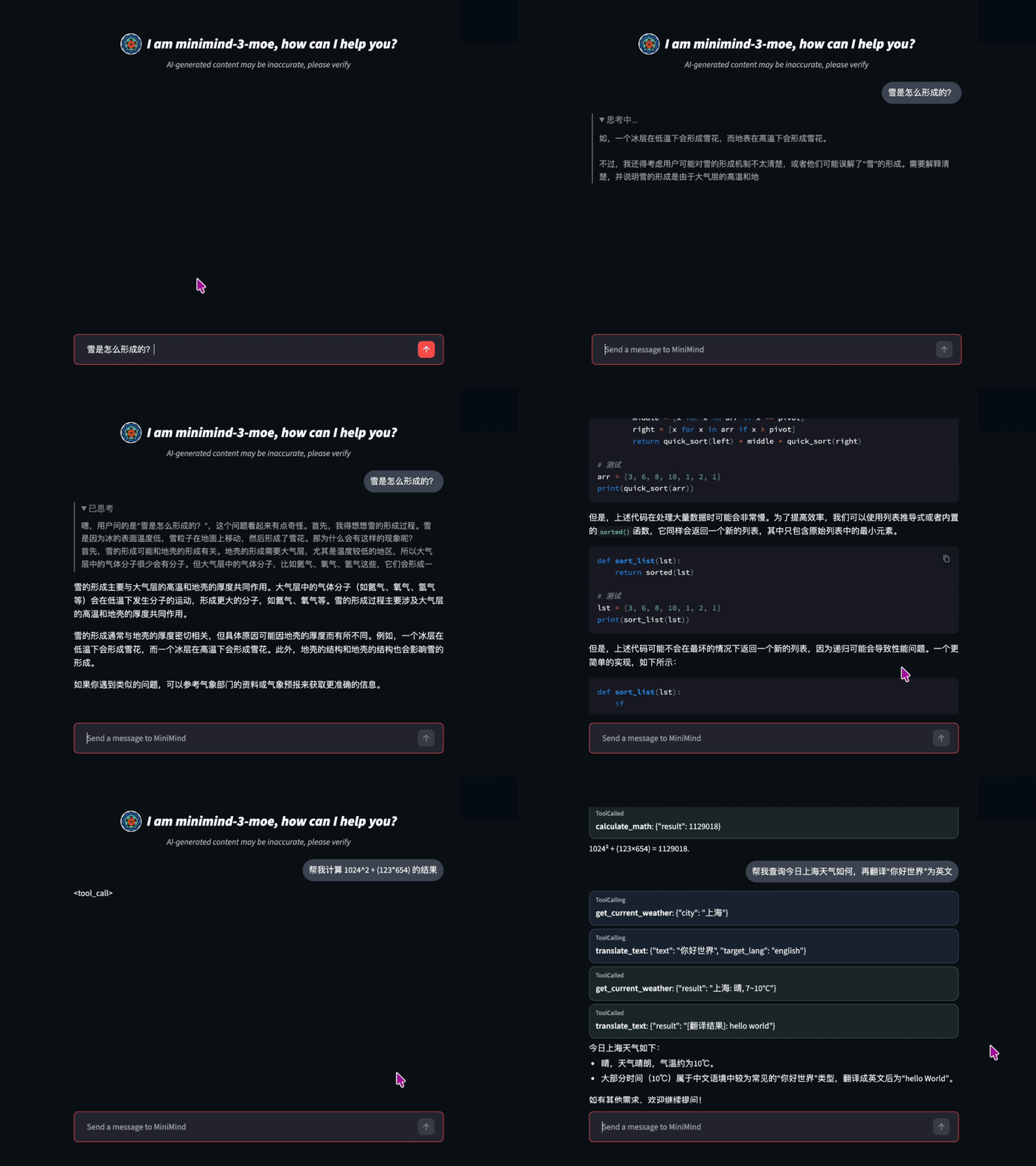
- 项目所有核心算法代码均从 0 使用 PyTorch 原生实现,不依赖第三方库提供的高层抽象接口。
- 这不仅是一个大语言模型全阶段开源复现项目,也是一套面向 LLM 入门与实践的教程。
- 希望此项目能为更多人提供一个可复现、可理解、可扩展的起点,一起感受创造的乐趣,并推动更广泛 AI 社区的进步。
Excerpts from the project README on GitHub. Copyright and licensing remain with the respective authors.
Claim its page: indexed whatever its rank, translated into six languages, and enriched with what you write yourself.
Get an email alert on its next release or when it starts trending — never miss the moment.
Free · no card · unsubscribe anytime🧠 Train a 64M-parameter LLM from scratch in just 2h!
minimind has 55.4k stars on GitHub. It has been forked 7.2k times. minimind is written mainly in Python. It has been in active development since 2024. minimind is available under the Apache-2.0 license. Its main topics are artificial-intelligence, large-language-model.
What is minimind?
🧠 Train a 64M-parameter LLM from scratch in just 2h!
Is minimind open source?
minimind is an open-source project. It is released under the Apache-2.0 license.
Is minimind free?
Yes. minimind is free and open source — you can use, modify and self-host it.
What license does minimind use?
minimind is available under the Apache-2.0 license.
What language is minimind written in?
minimind is written mainly in Python.
Add this live badge to your README — your GitHub stars and directory rank, refreshed daily.
[](https://olud.ai/project/jingyaogong-minimind.html)


Measured from GitHub topics shared by both projects, weighted by how rare each topic is.